
How AI Call Center Solutions Improve First Call Resolution and Efficiency
Customer support isn’t what it used to be—and that’s a good thing. In the past, contact centers were mostly reactive, waiting for customers to reach out and then trying to solve issues with limited context. Today, the rise of the artificial intelligence call center is changing that dynamic, allowing businesses to take a more proactive and efficient approach. With the help of AI service management solutions, support teams can access real-time insights, automate routine processes, and deliver faster, more personalized experiences.
One of the most important metrics in this space is First Call Resolution (FCR)—the ability to resolve a customer’s issue during the first interaction. When FCR is high, it usually means customers are getting fast, effective help without needing to follow up. When it’s low, frustration builds, repeat calls increase, and costs go up.
There’s also a strong link between agent efficiency and customer satisfaction (CSAT). When agents can quickly access the right information and respond with confidence, customers notice. AI Call Center Solutions make this possible by connecting data, tools, and workflows in real time, helping agents deliver smoother and more satisfying experiences.
Boosting First Call Resolution (FCR) with Intelligent Automation
Improving FCR is a top priority for most contact centers, and AI Call Center Solutions offer several ways to make that happen through intelligent automation.
One of the most impactful tools is real-time agent assist. During live interactions, AI analyzes conversations and provides instant suggestions, such as relevant knowledge base articles, troubleshooting steps, or recommended responses. This reduces the time agents spend searching for information and helps them deliver accurate solutions on the spot. It also minimizes errors, which is crucial for resolving issues on the first call.
Another important capability is Natural Language Understanding (NLU). Unlike traditional systems that rely on fixed scripts or keywords, NLU allows AI to interpret the intent behind a customer’s words. Whether a customer is speaking casually or using technical language, the system can understand the request and direct it appropriately. This reduces misrouted calls and ensures that customers are connected to the right agent or department from the beginning.
Automated data retrieval further enhances the process. Instead of asking customers to repeat their information or placing them on hold, AI instantly pulls up relevant details such as account history, previous interactions, and preferences. This gives agents a complete view of the customer journey, enabling them to provide faster and more personalized support.
Together, these features remove common friction points in customer interactions. By streamlining processes and empowering agents with real-time insights, AI Call Center Solutions significantly increase the chances of resolving issues during the first contact.
Driving Operational Efficiency Through AI Integration
While improving FCR is critical, businesses also need to focus on overall efficiency. AI Call Center Solutions help streamline operations, reduce manual workloads, and optimize resource allocation.
One of the biggest efficiency gains comes from reducing Average Handle Time (AHT). After each call, agents typically spend time documenting the interaction and completing post-call work (ACW). AI can automate much of this process by generating summaries, tagging conversations, and updating records automatically. This allows agents to move quickly to the next interaction without sacrificing accuracy.
Intelligent call routing is another powerful feature. Instead of placing customers in long queues or transferring them multiple times, AI uses data such as customer history, issue type, and sentiment to route calls to the most suitable agent. This not only improves efficiency but also increases the likelihood of resolving issues in a single interaction.
In addition, 24/7 self-service solutions are transforming how customers seek support. AI-powered chatbots and virtual assistants can handle a wide range of routine inquiries, including billing questions, password resets, and order tracking. These tools provide instant responses, even outside of business hours, reducing the volume of calls that require human intervention.
By offloading repetitive tasks and optimizing workflows, AI Call Center Solutions enable businesses to handle higher volumes of interactions without increasing costs. This creates a more scalable and efficient support system.
Leading Companies Offering AI Call Center Solutions
Many organizations are leading the way in delivering advanced AI Call Center Solutions, helping businesses improve both efficiency and customer experience. Here are some of the top companies in this space:
- Bright Pattern – A standout in the industry, Bright Pattern is widely recognized for its all-in-one AI-powered contact center platform designed to simplify complex customer journeys. Its strength lies in delivering true omnichannel support, allowing businesses to manage voice, chat, email, and messaging apps from a single interface while maintaining full context across interactions.
What sets Bright Pattern apart is its advanced real-time agent assist, which guides agents during live conversations with suggestions, next-best actions, and knowledge base content—significantly improving First Call Resolution (FCR). The platform also includes built-in AI automation such as intelligent IVR, chatbots, and workflow orchestration, reducing manual effort and handling high volumes with ease. In addition, Bright Pattern offers strong integration capabilities with CRM systems, enabling seamless data flow and a complete view of the customer. Its scalability makes it suitable for both mid-sized businesses and large enterprises looking to enhance efficiency without sacrificing personalization.
- Genesys – Known for its robust AI capabilities, including predictive routing, workforce engagement tools, and advanced analytics for customer experience optimization.
- Five9 – Provides intelligent virtual agents, speech analytics, and automation features that help businesses improve efficiency and deliver better support experiences.
- Talkdesk – Offers AI-driven solutions focused on automation, real-time insights, and seamless integrations for scalable customer support.
- Zendesk – Combines AI with customer service tools to deliver personalized, efficient, and consistent support across multiple channels.
- NICE – Specializes in AI-powered analytics, workforce optimization, and automation to enhance overall contact center performance.
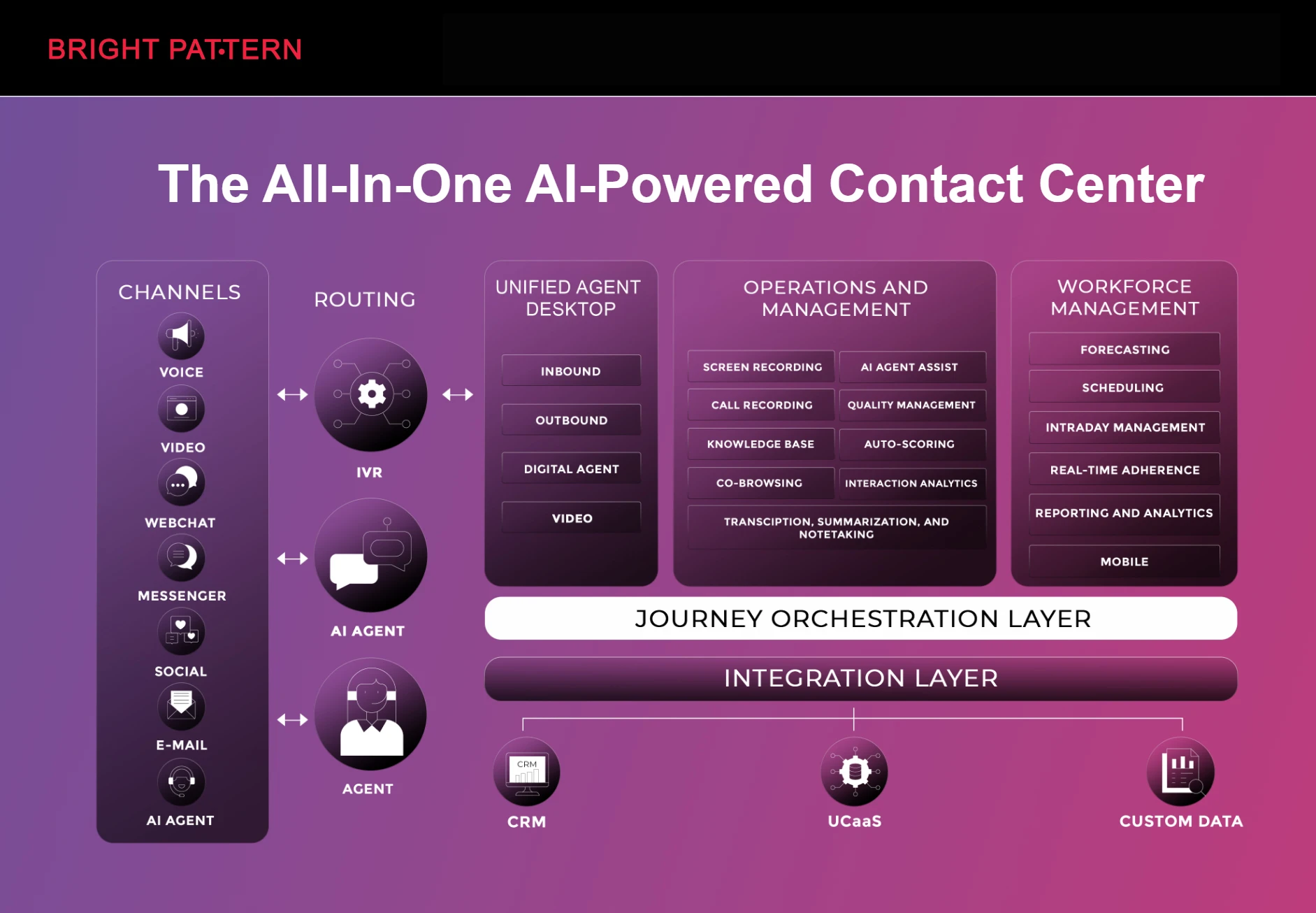
These companies demonstrate how AI Call Center Solutions are being applied in real-world scenarios to improve service quality, increase First Call Resolution, and drive operational efficiency across industries.
Key Features of Top-Tier AI Call Center Solutions
The effectiveness of AI Call Center Solutions depends largely on the features they offer. The most advanced platforms combine multiple capabilities to deliver both efficiency and a high-quality customer experience.
Sentiment analysis allows AI to detect emotions in a customer’s voice or text. If a customer is frustrated or upset, the system can alert the agent or trigger an escalation. This helps prevent negative experiences and ensures that issues are handled with the right level of urgency.
Predictive analytics is another essential feature. By analyzing historical data and trends, AI can forecast call volumes and customer behavior. This helps managers plan staffing levels more effectively and prepare for peak periods. It also provides insights into common issues, enabling businesses to address root causes and reduce call volumes over time.
Omnichannel support ensures a consistent experience across different communication channels. Customers may start a conversation via chat, follow up by email, and then call for further assistance. AI maintains context across these channels, so customers don’t have to repeat themselves. This continuity plays a significant role in improving both FCR and overall satisfaction.
These features work together to create a seamless and responsive support environment, making AI Call Center Solutions a valuable investment for businesses of all sizes.
Overcoming Implementation Challenges
Despite the many benefits, implementing AI Call Center Solutions comes with its own set of challenges. Addressing these early can help ensure a smoother transition and better results.
One common issue is integrating AI with existing systems, especially legacy CRM platforms. Many organizations rely on older technologies that may not easily support modern AI capabilities. Using APIs and integration tools can help bridge this gap and ensure seamless data flow between systems.
Another challenge is training employees to work alongside AI tools. Some agents may feel uncertain or resistant to change. Providing clear training and emphasizing how AI enhances their role—rather than replacing it—can help build confidence and encourage adoption.
Data privacy and compliance are also critical considerations. Since AI systems rely on large volumes of customer data, businesses must implement strong security measures and comply with relevant regulations. Transparency in data usage is key to maintaining customer trust.
By addressing these challenges, businesses can unlock the full potential of AI Call Center Solutions and achieve long-term success.
The Future of AI in the Contact Center
The future of customer support is closely tied to the continued evolution of AI Call Center Solutions. As technology advances, we can expect even more sophisticated capabilities that enhance both efficiency and personalization.
One major trend is hyper-personalization at scale. AI can analyze customer behavior, preferences, and past interactions to deliver highly tailored experiences. This goes beyond basic personalization, creating interactions that feel truly relevant and engaging.
Another important shift is the transformation of contact centers from cost centers into revenue generators. With AI-driven insights, agents can identify opportunities to upsell or cross-sell products and services that align with customer needs. This turns support interactions into valuable business opportunities.
As these innovations continue to develop, the role of human agents will remain essential. While AI can handle automation and data analysis, human agents bring empathy, creativity, and problem-solving skills that technology cannot fully replicate.
Conclusion: Elevating Your CX Strategy with AI
AI Call Center Solutions are reshaping the way businesses approach customer support. By improving First Call Resolution, reducing operational inefficiencies, and enhancing the overall customer experience, these solutions deliver measurable value across the board.
From real-time agent assistance and intelligent routing to predictive analytics and self-service tools, AI enables faster, smarter, and more personalized interactions. At the same time, it empowers agents by reducing repetitive tasks and allowing them to focus on meaningful conversations.
The real advantage comes from combining the speed and accuracy of AI with the human touch of skilled agents. Businesses that strike this balance can deliver exceptional customer experiences while maintaining efficiency and scalability.
As customer expectations continue to rise, investing in AI Call Center Solutions is no longer just an option—it’s a strategic move toward long-term growth, stronger customer relationships, and a more resilient support operation.
