
Kayak Fishing Safety Guide: What Every Angler Should Know
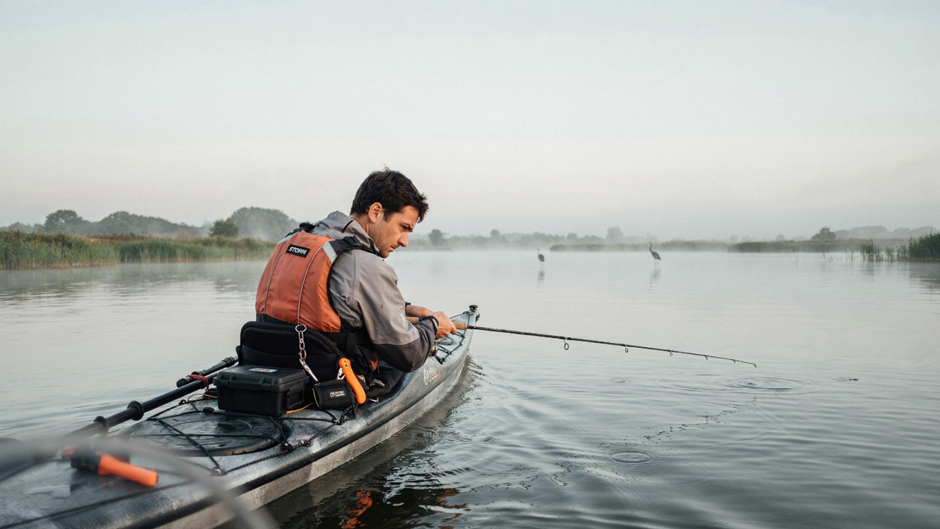
Kayak fishing safety comes down to six habits, and most accidents happen because one of them got skipped. Wear a properly fitted lifejacket or buoyancy aid the entire time you’re on the water, not just when it’s rough. Dress for the water temperature instead of the air temperature. Tell someone your launch point and return time before you set off. Keep a line-cutting knife within reach of either hand. Add a light or flag so other boats can see you. Then check conditions again right before you launch, because forecasts shift.
Getting this right starts with owning the correct kayak fishing safety accessories, not just a paddle and a rod. The rest of this guide walks through exactly what to carry, what it costs, and how your approach should change depending on where and when you’re fishing.
The gear that matters most, at a glance:
- Lifejacket or buoyancy aid worn at all times, not stowed under the seat.
- Line-cutting knife clipped to your body, not your kayak.
- Visibility light or flag for dawn, dusk, and poor light.
- A means of calling for help such as a phone in a waterproof case, a whistle, or a VHF radio.
- Tow float or dry bag to keep gear dry and give you something to hold onto.
- Bilge pump to clear water fast if you take a wave or a rough re-entry.
- First-aid kit sealed against water, checked every season.
Why Kayak Fishing Safety Matters: The Real Numbers
None of this is scare talk for its own sake. Between 2019 and 2024, 41 anglers lost their lives while fishing around the UK coast, and the RNLI’s analysis suggests many of those lives might have been saved with a lifejacket on. Anyone in the water wearing one is roughly four times more likely to survive than someone who isn’t.
Kayak-specific figures back this up. The U.S. Coast Guard’s most recent Recreational Boating Statistics report counted 89 kayaking deaths in a single year, with paddlecraft making up close to three in ten of all boating fatalities with a known vessel type. Drowning is the cause in about three-quarters of those cases, and the detail worth remembering is this one:
| Statistic | Figure | Source |
| Anglers who died around the UK coast, 2019–2024 | 41 deaths | RNLI angling safety analysis |
| Survival odds wearing a lifejacket | 4x more likely | RNLI |
| Kayaking fatalities in a single recent year (US) | 89 deaths | U.S. Coast Guard Recreational Boating Statistics |
| Drowning victims not wearing a lifejacket (US) | 87% | U.S. Coast Guard Recreational Boating Statistics |
| Lifejackets that failed inspection at RNLI clinics | 30% | RNLI / RYA lifejacket safety data |
The gear works. The problem is that too many anglers own it and still leave it in the car.
Kayak Fishing Safety Accessories Every Angler Needs
Building a proper kit doesn’t need to be complicated, but it does need to be complete. Here’s a full run-through of kayak fishing equipment worth having on board before you launch.
1. A Lifejacket or Buoyancy Aid You’ll Actually Keep On
This is the one piece of kit that shows up in nearly every fatality report, on the wrong side of the statistic. Most UK kayak anglers reach for a 50N buoyancy aid, since it’s built for paddling with full arm movement and usually has pockets for pliers and small tools. Anglers heading further offshore often step up to a 100N or 150N lifejacket for the extra buoyancy.
- Check that it carries an ISO 12402 or CE mark before you buy.
- Have it serviced at the manufacturer’s recommended interval, since roughly 30% of lifejackets brought in for inspection fail.
- Fit matters more than type. One that rides up around your ears when seated, or one you take off because it’s warm, isn’t doing its job.
2. A Line-Cutting Knife or Blunt-Tip Tool
If a hook or line ever tangles around a limb or your gear during a capsize, you need to cut yourself free in seconds. Clip a small line-cutter or blunt-tip knife directly to your lifejacket, not to a bag or the kayak deck, so it stays with you no matter what happens to the boat.
3. A Light or Flag for Visibility
Kayaks sit low in the water and are easy to miss, especially at dawn, dusk, or after dark, which is exactly when fish tend to bite best.
- A 360-degree white light mounted above deck height helps larger boat traffic spot you early.
- A tall safety flag adds a second visual cue in choppy conditions or bright glare.
4. A Reliable Way to Call for Help
A phone in a genuinely waterproof case is the baseline, but signal can drop out fast once you’re away from the shore or around a headland.
- Carry a whistle. It costs almost nothing and carries over wind and engine noise.
- Consider a handheld VHF radio for open water, since it reaches other vessels and HM Coastguard directly on Channel 16.
- Never rely on a single method of calling for help. The RNLI recommends carrying more than one.
5. A Tow Float or Dry Bag Combination
A small inflatable tow float clipped to your waist gives you something to hold onto if you’re separated from your kayak, and it keeps a phone or spare layer dry at the same time. It’s inexpensive, and it’s one item most kayak fishing articles skip entirely.
6. A Bilge Pump or Manual Bailer
Sit-inside kayaks especially can take on water from waves, rain, or a rough re-entry. A hand pump or simple bailer lets you clear it fast enough to keep paddling home instead of waiting for a tow.
7. A First-Aid Kit Rated for Water Exposure
A standard kit turns into a soggy mess the first time it gets splashed. Look for a compact kit in a sealed, waterproof pouch, and check the contents before every season, not just after you buy it.
What Kayak Fishing Equipment Costs: Budget to Premium
Budgets vary, and there’s no need to buy the most expensive version of everything. Here’s roughly what each tier looks like in UK pricing.
| Item | Budget | Mid-Range | Premium |
| Buoyancy aid or lifejacket | £35–£55 | £70–£110 | £130–£180 |
| Line-cutting knife | £8–£12 | £16–£24 | £30–£45 |
| Visibility light | £10–£16 | £20–£32 | £40–£65 |
| VHF radio / phone case | £12 (case only) | £50–£80 | £120–£200 (VHF) |
| Tow float | £20–£28 | £32–£45 | £50–£70 |
| Bilge pump | £8–£15 | £16–£24 | £28–£40 |
| First-aid kit | £12–£20 | £24–£36 | £40–£55 |
A complete budget kit comes in at roughly £105 to £155. That’s a small price against a repair bill, let alone anything worse.
The Danger Nobody Puts on the Gear List: Treble Hooks and Line
Kayak anglers talk endlessly about lifejackets and float plans, and far less about the moment a hookset goes wrong. Most lures carry two or three treble hooks, each with three points, and a hard hookset or a sudden capsize can drive one straight into a strap, a finger, or bare skin in a fraction of a second.
Experienced tournament anglers, including former search-and-rescue crew who now compete on the kayak circuit, describe it as one of the most dangerous moments in the sport rather than a minor nuisance. The good news is that the fix is simple:
- Keep pliers or a hook-removal tool within one-handed reach at all times.
- Secure loose rigged rods so hooks aren’t swinging free while you paddle.
- Learn the push-through-and-clip method for a hook embedded in skin before you ever need it.
- If a hook goes in deep, past the barb, or anywhere near an eye, stop fishing and get to a clinic or A&E rather than working it free yourself.
Cold Water Changes Everything: The 1-10-1 Rule
Air temperature tells you almost nothing about what happens if you end up in the water. UK sea temperatures rarely climb above 17°C even in summer, and inland stillwaters can run colder still. In water around 10°C, most people lose meaningful control of their arms and legs within about ten minutes, long before hypothermia itself becomes the threat. Hypothermia researcher Dr. Gordon Giesbrecht built a simple framework for this called the 1-10-1 rule.
| Phase | Approximate Window | What’s Happening |
| 1 minute | Cold shock | Involuntary gasping and rapid breathing. Highest drowning risk if your face goes under here. |
| 10 minutes | Cold incapacitation | Hands, arms, and legs lose useful strength and coordination for swimming or self-rescue. |
| 1 hour | Hypothermia onset | Core temperature drops enough to risk unconsciousness without flotation and rescue. |
The practical takeaway is simple. A wetsuit or drysuit doesn’t just keep you comfortable. It buys back the ten-minute window you need to self-rescue. Dress for the water, not the sky.
Self-Rescue: Getting Back Into Your Kayak
Most kayak fishing content stops at how to avoid capsizing. Almost none of it covers what to actually do once you’re in the water, which is the part that matters most when it happens.
- Stay with your kayak. It floats even when it’s flipped, and it’s far easier for anyone to spot than a swimmer alone.
- Flip the kayak upright by pushing down on one side and pulling up on the opposite edge.
- Retrieve gear on tethers first, since loose rods and tackle boxes sink or drift fast.
- Approach from the side, kick hard, and pull yourself across the seat area in one motion rather than climbing straight up over the side.
- If re-entry isn’t working after two or three tries, stop burning energy on it. Hold onto the kayak, signal with your whistle or light, and wait for help.
Practising this once in calm, sheltered water near shore, with a friend watching, turns it from a theory into a skill you can trust under pressure.
Safety Changes Depending on Where You’re Fishing
Estuary and Coastal Launches
- Time your launch and landing around the tide, not just the weather forecast.
- Watch for rip currents and offshore winds pulling you away from land.
- Stay clearly outside the channels used by larger boat traffic.
Rivers and Moving Water
- Strainers, fallen trees, and weirs are far more dangerous than the current itself.
- Never approach a weir or low-head structure from either side.
- Ferry across current at an angle rather than fighting it head-on.
Stillwaters, Lakes, and Reservoirs
- This is where anglers get the most complacent.
- A calm stillwater can turn choppy within minutes once wind picks up.
- Shorelines look closer than they are once you’re sitting low in a kayak.
Cold-Weather and Off-Season Fishing
This is where the 1-10-1 numbers above stop being theoretical. If you’re fishing through autumn, winter, or early spring, treat the water temperature, not the sunny forecast, as the thing that decides what you wear.
Trip Planning, Float Plans, and Weather
Three habits cover most of what goes wrong before it even starts.
- File a float plan: tell a specific person your launch point, planned route, and return time, and check in with them when you’re back.
- Check conditions continuously: wind speed, tide times, and storm warnings all shift in the hours before you launch, so check again right before you go, not just the night before.
- Dress for immersion: choose clothing based on what happens if you go in the water, not what feels comfortable standing on the bank.
UK Lifejacket Rules and Safety Standards for Kayak Anglers
UK law doesn’t set a blanket requirement to wear a lifejacket on a recreational kayak, unlike some other countries. That doesn’t make it optional in practice. The RYA’s official safety policy is direct on this point:
- Wear a lifejacket or buoyancy aid unless it’s genuinely safe to take it off.
- Any lifejacket or buoyancy aid sold in the UK must meet ISO 12402 or the equivalent EN 393–399 standards.
- Impact vests and buoyancy aids need a minimum buoyancy rating of 50 Newtons under ISO 12402-5 or EN 393.
- Get your kit serviced at the manufacturer’s recommended interval through RYA, RNLI, or MCA-approved guidance.
In an emergency on UK waters, call 999 and ask for the Coastguard. Local canoe and kayak clubs, along with Paddle UK, also run training sessions worth attending before your first proper trip.
Should You Launch Today? A Red-Flag Checklist
Run through this before you put in. Any single red flag is a reason to reconsider, not just a note to keep in mind.
- Sustained wind or forecast gusts that exceed your skill level and your kayak’s stability.
- A storm cell or lightning risk within your paddling radius in the next few hours.
- Water temperature under 15°C without a wetsuit, drysuit, or equivalent layering on board.
- Fishing solo in a remote spot with no phone signal and no float plan filed.
- Visibility low enough that you can’t clearly see other boat traffic or the shoreline.
Quick Self-Check Before You Push Off
- Lifejacket or buoyancy aid is on your body, not stowed under the seat.
- Float plan sent to someone who knows your return time.
- Weather and water temperature checked within the last hour.
- Knife or line-cutter clipped where either hand can reach it.
- Self-rescue practised at least once in calm water.
A Worked Example: Why the Numbers Matter
Picture a stillwater at 11°C in early spring, and a capsize roughly 180 metres from the bank. Based on the 1-10-1 figures above, meaningful arm and leg strength starts fading within around ten minutes in water that cold. Swimming 180 metres at a relaxed pace takes most people around six to eight minutes in calm conditions with no gear on, and that’s before cold shock, waterlogged clothing, and adrenaline slow things down.
A lifejacket worn from the start removes the need to swim at all, since it keeps your head above water even if your arms and legs stop cooperating. A tow float and a wetsuit stretch that window even further. The numbers don’t leave much room for assuming you’ll be fine without them.
Frequently Asked Questions
Do you need a lifejacket for kayak fishing in the UK?
There’s no legal requirement for recreational paddlers, but the RYA and RNLI both strongly recommend wearing one at all times. Anyone in the water wearing a lifejacket is roughly four times more likely to survive.
What’s the difference between a buoyancy aid and a lifejacket?
A buoyancy aid gives around 50 Newtons of support and keeps you afloat while you help yourself. A lifejacket, rated 100N or 150N, is designed to turn an unconscious person face-up and is better suited to offshore or coastal fishing.
Is it safe to kayak fish alone?
It can be, but it removes your margin for error. A float plan, a charged phone in a waterproof case, and practised self-rescue skills matter even more when nobody else is there to help.
What’s the safest time of day to kayak fish?
Early morning tends to bring the calmest wind and water, but it’s also low-light. Pair an early launch with a visibility light and a fresh check of the wind and tide forecast.
How cold does the water need to be before it’s dangerous?
Once water temperature drops toward 15°C, cold incapacitation becomes a real risk within minutes of an unexpected swim. Most experienced anglers add a wetsuit or drysuit below that point rather than trusting air temperature alone.
What should you do if you capsize while kayak fishing?
Stay with your kayak, control your breathing through the first minute of cold shock, and try re-entry from the side rather than climbing straight over the top. If it isn’t working after a couple of tries, stop, signal for help, and wait with the kayak.
Before You Launch
Kayak fishing rewards preparation more than luck. Wear the lifejacket the whole trip, dress for the water rather than the weather, keep a line-cutter within reach, tell someone your plan, and practise getting back into your kayak before you ever need to. None of this takes the fun out of the sport. It’s what lets you keep doing it for years.
Whenever you’re ready to check your kit against what’s actually recommended, it’s worth comparing notes with other UK anglers on the same waters you fish.
